


In short
- The category is named after dialling, and the work is now research, writing and reply handling.
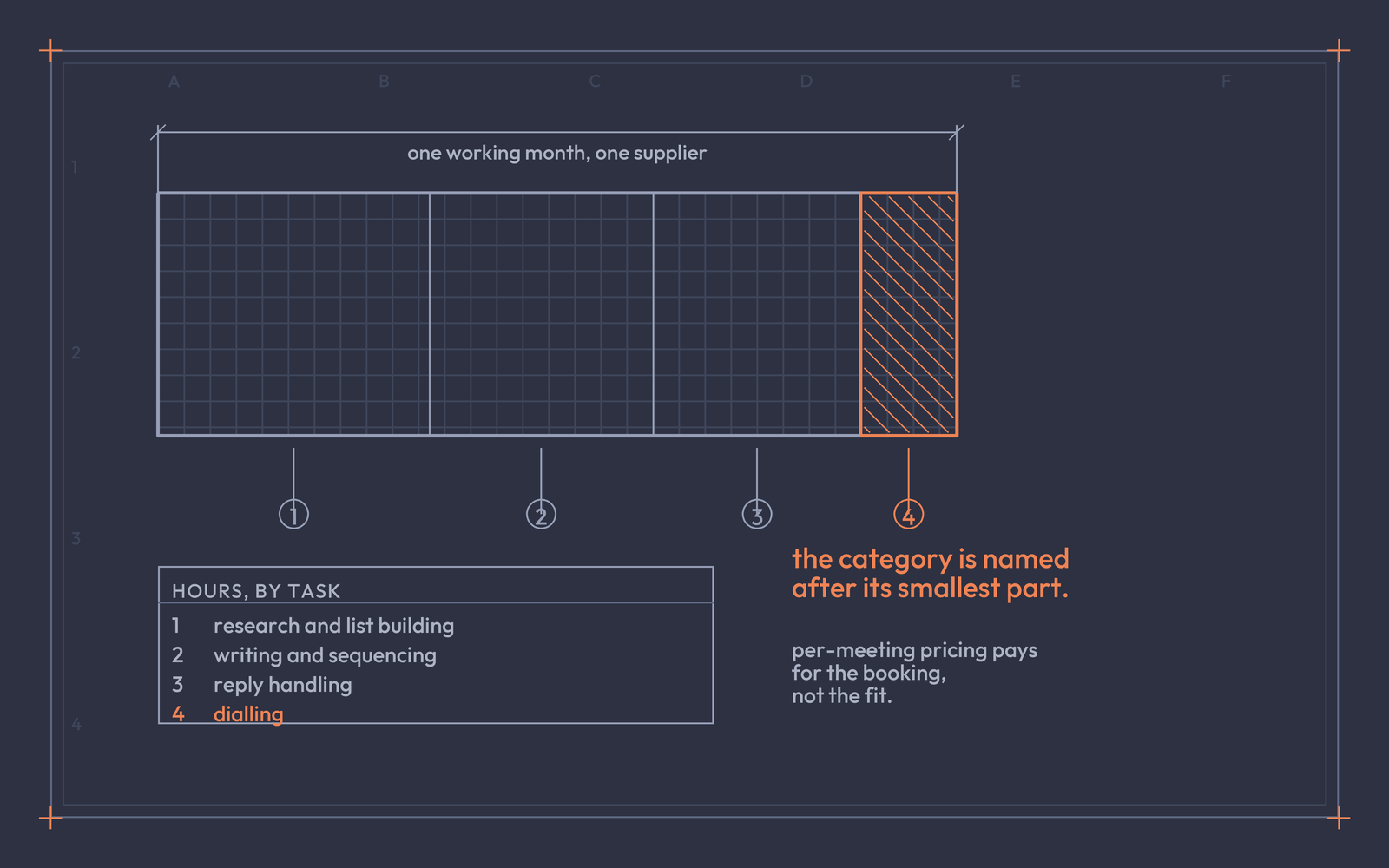
- Follow the hours in a typical engagement and time on the phone is the smallest line.
- Per-meeting pricing selects for the cheapest possible meeting, because that is what it rewards.
- A supplier sending from your primary domain leaves damage that outlives the contract.
- Four questions separate a real operator from a headcount reseller.
- The test that matters: would your sales team have taken that meeting anyway.
The name is twenty years out of date
Appointment setting got its name when the work was dialling. A room of people, a list, a script, and a target number of conversations a day.
Look at what an appointment setting engagement consists of now and the phone is a small part of it. The hours go into building a list of accounts worth contacting, writing sequences aimed at one segment at a time, setting up and warming sending infrastructure, and handling the replies that come back.
That is a cold email operation. The category label describes the last step of a process whose first four steps decide whether it works.
This matters to a buyer because you cannot judge a supplier on the part of the job you can see.
Follow the hours
In a typical month of outbound for one client, the work divides roughly like this.
Account research. Who is worth contacting, verified by a human rather than scraped and hoped for. This is the single largest determinant of reply rate and the easiest thing for a supplier to skimp on invisibly.
Infrastructure. Domains bought and warmed, mailboxes provisioned, authentication configured, inbox rotation set up. Weeks of elapsed time before anything sends.
Copy. Sequences written per segment, with the follow-ups that produce most of the replies.
Reply handling. Someone reading what comes back, routing the positives the same day, and dealing with the ones that are neither yes nor no.
Calls. Real, and smaller than the other four.
A supplier who cannot describe the first four in detail is selling you the fifth.
Why per-meeting pricing produces bad meetings
Paying per meeting sounds like paying for outcomes. It is, and the outcome it selects for is the cheapest meeting that can be made to count.
The incentive is straightforward. A supplier paid per meeting maximises meetings. The cheapest way to produce more meetings is to lower the bar for who qualifies as a prospect and to push harder for a diary slot. Both damage the thing you were buying.
You see this as a pattern rather than as a single bad meeting. Attendance drops. Sales starts describing the meetings as unqualified. The supplier points at the count, which is genuinely being met.
Pricing on positive reply rate, or on a monthly fee with reply rate as the reported number, removes that incentive. It also puts the risk where it belongs, since the supplier controls the reply and the client’s sales team controls what happens after it.
The deliverability risk nobody raises in the sales process
Ask where the mail is being sent from. The answer decides how much of this can damage you.
Cold outbound carries a higher complaint rate than opted-in marketing by its nature. Google, Yahoo and Microsoft all enforce a spam complaint ceiling of 0.3%, and since November 2025 non-compliant mail is rejected outright rather than filtered.
A supplier running your outreach from your primary domain is putting your invoices, your support replies and your sales team’s own email in the same reputation pool as the campaign. If it goes badly, the damage stays after the contract ends, and repairing it takes months.
Separate sending domains isolate the risk completely. Subdomains isolate it partly, since reputation is evaluated separately but still associates with the parent.
Four questions to ask any supplier
Ask these before signing. The answers separate an operator from a reseller of headcount.
- Which domains will you send from, and who owns them? If the answer is your primary domain, stop. If the answer is domains they own, ask what happens to them when the contract ends.
- Who built the account list, and how was it verified? A named process beats a named tool.
- What is your positive reply rate on comparable accounts? Not open rate, which no longer measures anything reliable. Reply rate.
- Who handles a reply that is not a yes? Most value in outbound sits in the replies that are “not now” and “wrong person”, and most suppliers discard both.
The test that decides whether it worked
There is one question worth asking your own sales team after the first quarter.
Would you have got this meeting anyway?
A meeting with an account already in an active deal cycle, or one that came inbound last month, is a meeting you paid twice for. The value of outbound sits entirely in conversations that would not otherwise have happened, and that is measurable if you check the account against your own CRM before crediting it.
Questions, answered
Is appointment setting worth it at all? When the list is genuinely researched and the sales team works the replies, yes. When either half is missing, no amount of activity fixes it.
How long before the first meeting? Domain warm-up alone takes around three weeks and cannot be rushed without damaging deliverability. Research and copy run in parallel during that time. Anyone promising meetings in week one is sending from somewhere that was already warm, which is usually your domain.
Should we do this in-house instead? The infrastructure and the discipline are the hard parts, and both transfer. If you build it in-house, you own the domains and the process at the end, which is the strongest argument for it.
What reply rate should we expect? Published ranges vary so widely by list quality and offer that an external benchmark tells you little. Agree a baseline from the first month and judge against your own trend.
Does cold outbound still work under the 2026 sender rules? Yes, on properly separated infrastructure with a researched list. The rules made sloppy outbound stop working, which is a good outcome for anyone doing it properly.
Sources
- Google, Yahoo and Microsoft bulk sender requirements, 2025 to 2026. See the separate post on the sender rules for full citations.